An investigative approach to small clues
A family may have only a surname, a misspelt town, one date or a remembered story. Our team compares these clues to work out where to look and which documents may answer the family’s question. Established facts and possible connections are kept distinct.
We develop our own research databases and tools for searching and comparing records. Their role is to help organise information and test possible connections. The availability of useful starting material is checked for each request.
The curator’s background
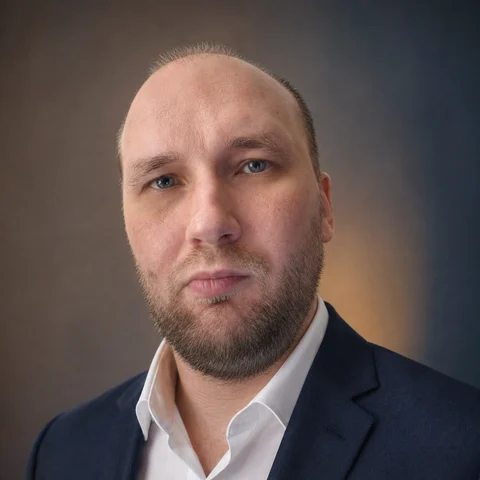
Alexander Efimov guides the project’s research direction. Ukrainian and Russian are his native languages. He reads 19th- and 20th-century handwriting in both languages, including pre-reform spelling, and translates relevant records into English.
He holds a journalist’s ID and has around eight years of experience in the antiques field, including work with old documents and their provenance. This background informs the attention given to the wording, context and reliability of historical material.
Digital tools, with human checking
Our project team uses computer methods and AI tools to help read, compare and organise historical material. The work remains under human supervision. Before a finding is used in a report, a person checks it against the original document image.
Uncertain readings are marked clearly. A suggested reading or a possible family connection is not presented as an established fact. The enquiry form sends your message to email; it does not automatically submit it for AI analysis.
Agreeing the work and language needs
Russian and Ukrainian handwriting are part of the curator’s own expertise. For Polish, Latin, German, Hebrew or Yiddish material, we assess the task and any suitable tools or specialist assistance case by case. Feasibility, costs and timing are discussed before the work is agreed.
You can write in English, Ukrainian or Russian. Our team first checks whether our materials offer a useful starting point, then agrees the research with you. A particular document or finding cannot be guaranteed.